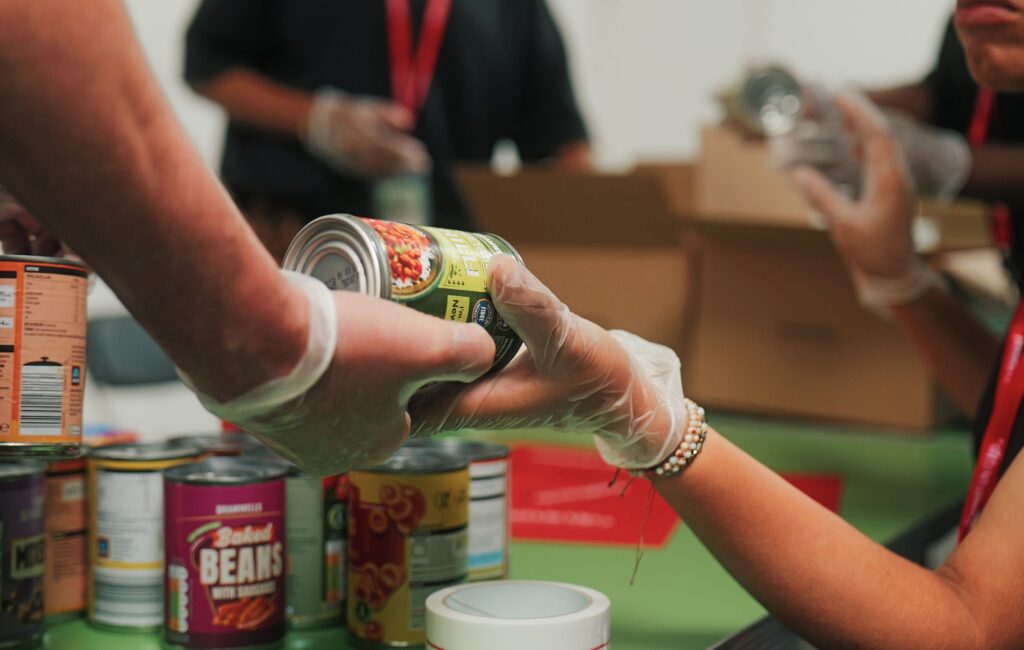
Every day, perfectly good food goes to waste while individuals and families struggle to access basic essentials. But what if more of these resources could be redirected to the people who need them?
Feed Us Up, a community-focused organisation, is working to make this happen by connecting businesses, charities and local communities to reduce waste and ensure surplus food and essential items reach those who need them most.
Making a difference for people and the planet
Food waste is not just a social issue; it also has a significant environmental impact. According to the United Nations Environment Programme (UNEP), food waste is responsible for an estimated 8–10% of global greenhouse gas emissions.
Redistributing surplus food offers a practical way to tackle both challenges, reducing environmental waste while supporting people experiencing food insecurity.
Through partnerships with businesses and organisations, Feed Us Up helps redirect surplus food and other essential resources to communities where they can make a difference.
The power of community collaboration
At the heart of Feed Us Up’s approach is the belief that effective giving goes beyond donations. It’s about building relationships, making support more accessible and strengthening communities.
The organisation has also partnered with Ruils Independent Living, a user-led charity supporting disabled people in South-West London, to provide regular grocery support to people accessing its services.
Volunteers play an important role in this work, helping overcome barriers such as limited transport and digital exclusion to ensure support reaches those who may otherwise miss out.
Building stronger, more sustainable communities
Food redistribution alone cannot solve food insecurity, but it can make a meaningful difference. By working together, businesses, charities and volunteers can help reduce waste, support people facing financial pressures and build stronger community connections.
Feed Us Up’s work highlights how sharing existing resources can create positive change for both people and the environment.
Find out more about Feed Us Up and its work:www.feedusup.org.uk
Read their full articles below:
FROM SURPLUS TO SUPPORT: THE ENVIRONMENTAL CASE FOR FOOD REDISTRIBUTION