Experiences of Urdu-Speaking Sanctuary Seeking Women When Accessing Women’s Health Services in Wandsworth.
Through trauma-informed, community research, we aim to understand the specific impact that language barriers have on sanctuary-seeking women when accessing women’s health services in Wandsworth.
January Pilot
We collaborated with a local voluntary sector organisation, Happy Homes Community, to involve 41 Urdu-speaking sanctuary-seeking women in a research café.
March Workshop
We collaborated with Roehampton Wellbeing for Women and Children, Mindworks UK, and zine artist Asma Istwani to involve 15 Urdu- and Farsi-speaking sanctuary-seeking women in this workshop.
June Workshop
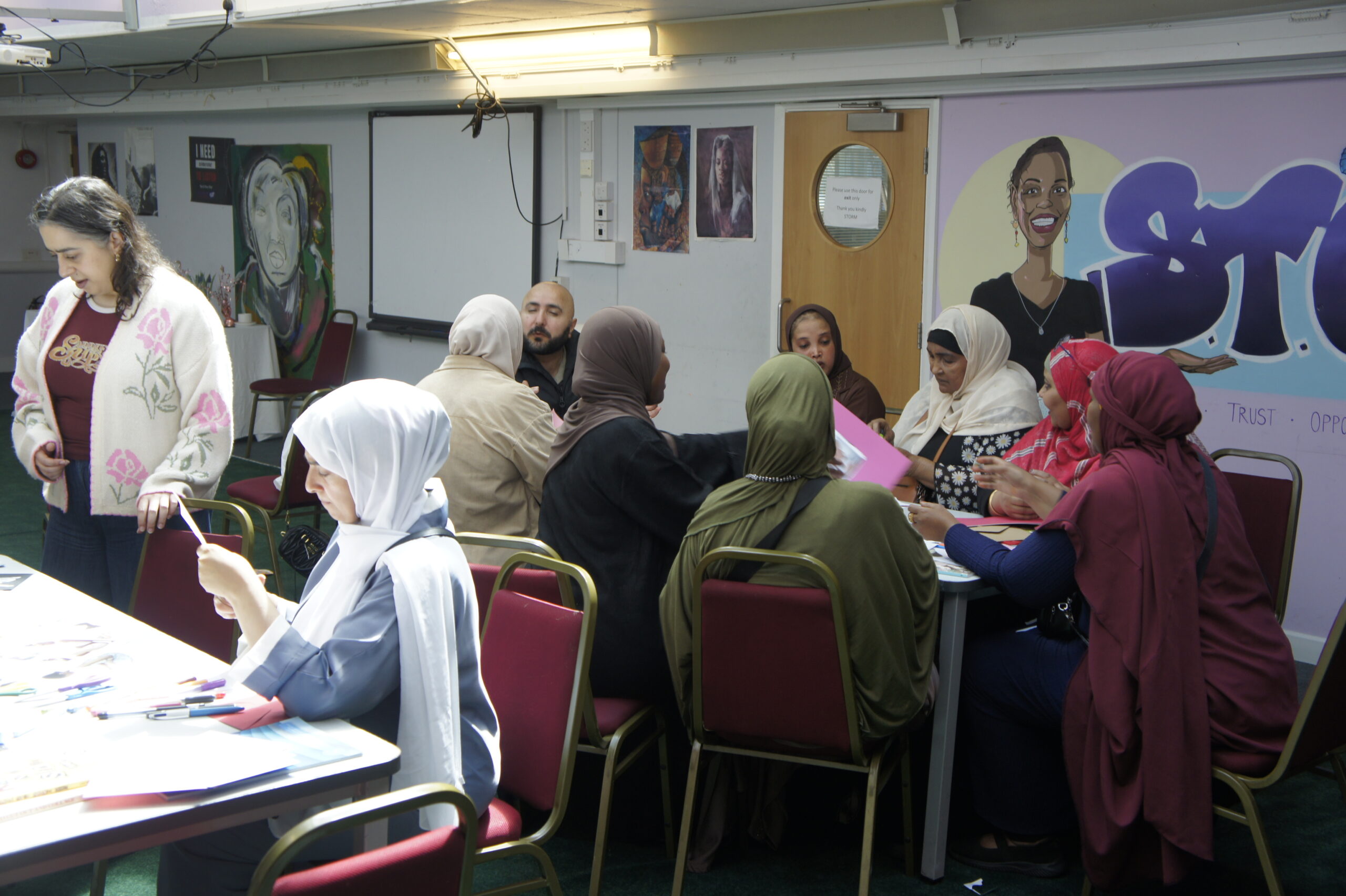
We collaborated with STORM Family Centre, Mindworks UK, Citizen Advice, reflexologist Fatima Ali, and zine artist Asma Istwani to involve 25 Somali- and Arabic-speaking sanctuary-seeking women in this workshop.
Our process and findings
By collaborating with these key community partners, we were able to maintain a safe and familiar space that encouraged open conversations around women’s health.
We thank the women who attended and generously shared their personal stories around accessing women’s healthcare. Through group discussions, as well as a collage-making and creative writing session hosted by artist Asma Istwani (currently completing her residency with Culturally Mindful) we were able to gather insights about the particular challenges faced by sanctuary-seeking women in Wandsworth.
Some of our findings from the workshops are:
- Language barriers:
- Language barriers were identified as one of the biggest challenges when accessing GP services, and many participants rely on friends or family members to accompany them to appointments and help with communication
- Google Translate is helpful, but they prefer to communicate with healthcare providers in their language
- There is a lack of trust in the interpretation provided because sometimes interpreters are not always available when needed, interpreters occasionally fail to attend appointments, or a wrong interpreter or dialect is arranged
- Some participants have been asked to bring their own interpreter
- Religious and cultural barriers: A preference to be seen by female GPs and consultants
- Digital barriers: Online access to healthcare is challenging
The entirety of the stories, findings, and recommendations will be included in our final report and in our zine, which will be launched in early 2027.
Next Steps
- Continue to circulate the survey amongst sanctuary-seeking women
- Continue to circulate the survey amongst women’s healthcare services to gather insights on their experiences providing support to sanctuary-seeking women who do not speak English fluently
- Host a community event launching a zine (a small, usually self-published, creative resource that aims to connect communities and empower readers and creators (Mixam, 2025)) and disseminating findings with community organisations, the council, NHS professionals, and Wandsworth residents
- Produce resources reporting insights (report and zine)
- Establish new community relationships through continued collaboration with local voluntary sector organisations to continue collecting stories and seeking funding to create new opportunities to support organisations which work with sanctuary-seeking women
Participate in the survey
If you are a woman who is a refugee or asylum-seeking woman (sanctuary-seeking woman):
We have developed a series of questions to understand the impact of language on the healthcare experiences of women who are currently seeking sanctuary or have sought sanctuary (refugees and asylum-seekers) in our Borough of Wandsworth.
We want to know whether or not you have accessed women’s health services and the impact that language barriers have had on your experience.
o Farsi: https://www.smartsurvey.co.uk/s/NBOKLK/
o Urdu: https://www.smartsurvey.co.uk/s/MDTJYK/
o Somali: https://www.smartsurvey.co.uk/s/11Q6WF/
o Arabic: https://www.smartsurvey.co.uk/s/8INCVS/
o English: https://www.smartsurvey.co.uk/s/4LTC3K/
If you are a healthcare professional or work with women who are refugees: